
Posted by Michele Priest on May 18th 2026
Microplastics and Children: What Every Family Should Know
Plastics used in single-use bottles, packaging, textiles, and household materials break down into microplastics now found in drinking water, food, and indoor air. What can we do to protect our children?
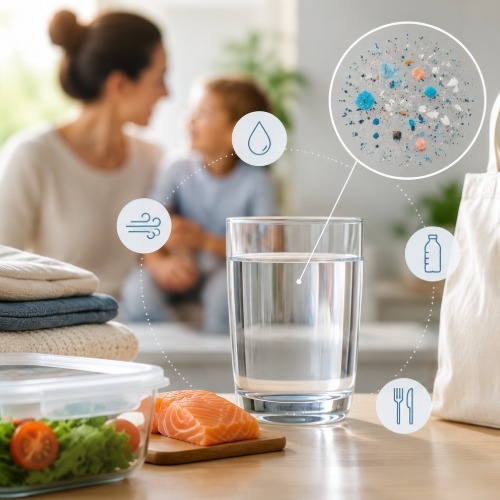 Microplastics have now been detected in human blood, lung tissue, breastmilk, and placental samples; evidence that exposure begins early and is more widespread than previously understood. How can we reduce exposure to microplastics?
For children, this isn’t just an environmental issue; it’s a health consideration. Their bodies are still developing, their exposure levels are higher relative to their size, and growing research suggests that early-life exposure to plastic-related contaminants deserves attention.
This guide draws from leading health and scientific organizations to explain what’s known—and where families can take practical steps to reduce children’s environmental exposure.

Why Children Are More Vulnerable to Microplastics
Children experience environmental exposures differently than adults. According to the U.S. Centers for Disease Control and Prevention, kids eat, drink, and breathe more per pound of body weight. The CDC notes that children cannot simply be treated as 'little adults' when evaluating environmental exposures. Because their bodies are still developing, children may be more vulnerable to environmental exposures.
At the same time, their systems are still developing. Research from NYU Langone Health highlights how early exposure to certain plastic-associated chemicals, such as phthalates and bisphenols, has been linked to long-term health risks.
The World Health Organization has also evaluated microplastics in drinking water and notes potential concerns tied to chemical exposure and particle ingestion.
In simple terms: children may experience higher exposure levels and may be more sensitive to certain environmental contaminants during development.
Where Microplastics Show Up in Everyday Life
Microplastics are not limited to oceans or pollution hotspots; they are part of your family’s everyday exposure.
Drinking Water: A Daily Exposure Point
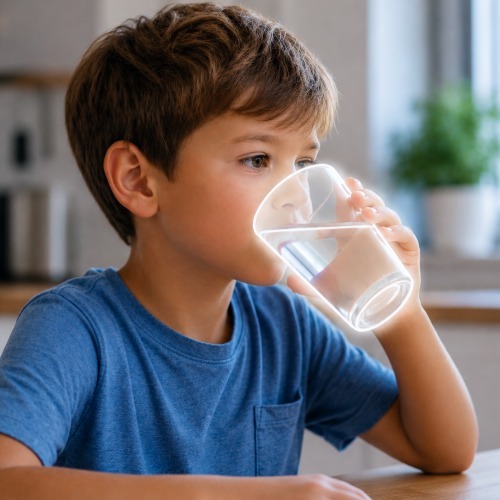
Microplastics have been detected in drinking water sources globally, including both tap water and bottled water, raising important questions about how to reduce microplastics in drinking water at home.
The World Health Organization notes that microplastics have been detected in drinking water supplies worldwide.
Because water is consumed throughout the day, it represents one of the most consistent exposure pathways, especially for children.
Food and Food Packaging
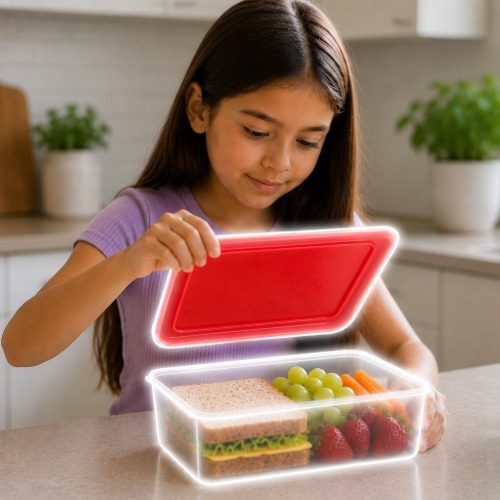
Microplastics have been identified in a wide range of foods. The National Academy of Sciences outlines how food packaging, particularly plastic, can contribute to exposure, especially when heat is involved.
Heating food in plastic containers or covering hot food with plastic wrap may increase the transfer of microscopic particles into what we eat.
 Indoor Air and Household Dust
Indoor environments are a major source of exposure. Synthetic materials like carpets, furniture, and clothing shed fibers that accumulate in dust and circulate in the air.
Peer-reviewed research published in Environment International (Januray 2021) shows that airborne microplastics are measurable indoors.
Because children spend more time indoors and closer to the ground, they are more likely to inhale or ingest these particles.
What the Science Says Today
Microplastics have now been detected in multiple areas of the human body.
The National Academy of Sciences notes that while long-term outcomes are still being studied, researchers continue to examine ways to better understand and reduce exposure.
Similarly, both the World Health Organization and the U.S. Environmental Protection Agency continue to study potential exposure risks and support efforts to better understand and reduce unnecessary exposure, particularly for children.
While long-term outcomes are still being studied, the growing body of research across leading health organizations supports taking practical steps now, especially when it comes to reducing children’s daily exposure.
The Critical Distinction Most People Miss
Most discussions focus on: using less plastic, avoiding heat, and improving habits.
But there’s another layer.
There is a meaningful difference between reducing expoure to microplastics and physically reducing particles at the point of consumption.
- Reducing exposure: behavioral changes
- Physically reducing particles at point of consumption: filtration and treatment approaches.
In water quality, the difference between reducing exposure and physically reducing particles at the point of consumption is a critical distinction, especially when dealing with microscopic particles.

6 Practical, High-Impact Steps to Reduce Exposure
Eliminating microplastics entirely isn’t realistic, but targeted changes can significantly reduce daily exposure.
- Rethink Food Storage and Heating
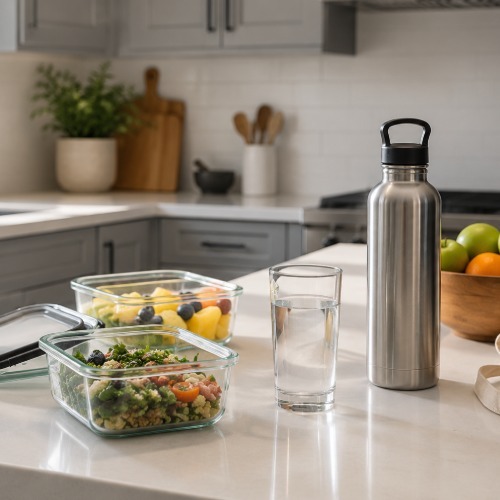
- Use glass or stainless steel instead of plastic containers.
- Avoid microwaving food in plastic containers.
- Limit plastic wrap on hot foods.
Heat can increase the release of microplastics and associated chemicals.
- Take Control of Drinking Water Quality
Water is one of the most consistent exposure pathways, and one of the most controllable. Studies have detected microplastics in tap water worldwide.
The World Health Organization notes that microplastics are present in drinking water globally. But not all solutions address them equally.
From a water quality standpoint, effectiveness comes down to filtration design, pore size, and third-party certification—factors that determine whether microscopic particles are effectively reduced or simply pass through.
This is why many families are now looking for the best ways to reduce or reduce ethe presence of microplastics from drinking water at the point of use.
Options that can help reduce or remove microplastics:
- Reverse Osmosis (RO) Systems:
Effective at reducing very small particles, including many microplastics and dissolved contaminants. - Ultrafiltration (UF):
Designed to reduce microscopic particles based on membrane pore size. - Activated Carbon (with sub-micron filtration):
Certain activated carbon systems with sub-micron filtration may help reduce microplastics as well as many other contaminants - Certified Point-of-Use Systems:
Some products tested to NSF/ANSI standards (such as NSF/ANSI 42 or 53) have been certified for microplastic reduction.
Effectiveness of water filtration products depends on factors like pore size, system design, and third-party certification. Not all water filtration products perform the same.
For families, choosing a well-designed drinking water system can meaningfully reduce daily intake, not just of microplastics, but of other contaminants that may be present.
- Reduce Single-Use Plastics
- Switch to reusable bottles (glass or stainless steel)
- Use cloth shopping bags
- Choose products with minimal plastic packaging
- Improve Indoor Air Quality
- Vacuum regularly using a HEPA filter
- Dust with damp cloths regularly
- Encourage frequent handwashing
- Choose Textiles More Intentionally
- Opt for natural fibers like cotton or wool
- Wash clothes in cooler water
- Avoid excessive heat when drying clothes
- Pay Special Attention to Infants and Toddlers
- Use non-plastic baby bottles when possible
- Avoid heating liquids in plastic
- Choose toys made from alternate materials when possible
Why Early Action Matters
Microplastic exposure can accumulate over time. It starts early, repeats daily, and may interact with other environmental exposures over time.
The National Academies of Sciences and World Health Organization both emphasize the importance of continued research cand practical exposure-reduction strategies, especially during early development.
A Smarter, More Controlled Approach
 Protecting children from microplastics doesn’t require extreme changes. It comes down to making better decisions in the areas that matter most:
- Food contact materials
- Drinking water quality
- Indoor air and dust
- Everyday product choices
Among these, drinking water stands out because it is consumed daily and is one of the few exposure pathways families can consistently control.
For many families, meaningful exposure reduction doesn’t come from a single change, but from consistently reducing exposure across the small, everyday decisions that add up over time.
Looking Ahead
Microplastics are now part of the modern environment. Research will continue to evolve, but current research suggests that exposure is widespread, children face higher relative risk, and reducing intake, where possible, is a smart, evidence-based approach.
For families, the goal isn’t perfection, it’s control.
And when it comes to children’s health, the most effective protection often comes from small, consistent decisions, especially in something as fundamental as the water they drink every day.

Trusted Sources & Research
U.S. Centers for Disease Control and Prevention (CDC) - Children’s Environmental Health
Journal of Contaminant Hydrology - Microplastics in water: Occurrence, fate and removal (May 2024)
NYU Langone Health - Seven Tips for Reducing Your Exposure to Microplastics & Plastic Additives
World Health Organization (WHO) - Dietary and inhalation exposure to nano- and microplastic particles and potential implications for human health
World Health Organization (WHO)- Microplastics in drinking-water
National Academies of Sciences, Engineering, and Medicine - Reckoning with the U.S. Role in Global Ocean Plastic Waste (2022)
Science of the Total Environment - There’s something in the air: A review of sources, prevalence and behavior of microplastics in the atmosphere (May 2023)