
Posted by Michele Priest on Jul 6th 2026
Pharmaceuticals in Drinking Water
What Current Research Says and How to Protect Your Water
Trace amounts of pharmaceuticals have been detected in rivers, lakes, groundwater, wastewater, and in some finished drinking water supplies around the world. Most concentrations found in drinking water are extremely low, often in parts per trillion (ppt) or parts per billion (ppb). Current research has not established that these trace levels cause adverse health effects in humans, but scientists continue to study the potential impacts of long-term exposure and mixtures of multiple compounds. Conventional wastewater treatment systems were not designed to remove pharmaceutical compounds, researchers and water utilities continue working to improve monitoring and treatment technologies.
|
Are there pharmaceuticals in drinking water? Yes. Trace amounts of pharmaceuticals have been detected in some public drinking water supplies, but current research has not established that the extremely low concentrations typically found cause adverse health effects in humans. |

Key Takeaways
- Pharmaceuticals can enter water through human excretion, improper medication disposal, agricultural runoff, wastewater discharge, and landfill leachate.
- Scientists have detected antibiotics, hormones, pain relievers, antidepressants, anticonvulsants, and other medications in surface water and, in some cases, drinking water.
- Current research indicates concentrations in drinking water are generally very low, but scientists continue studying possible long-term effects of lifelong exposure.
- Conventional wastewater treatment plants effectively remove many contaminants but were not specifically designed to eliminate all pharmaceutical compounds.
- Proper medication disposal and high-quality home water filtration can help reduce environmental contamination and improve drinking water quality
Pharmaceuticals in Drinking Water: A Growing Area of Scientific Research
Clean drinking water is one of the foundations of public health. While most people think about contaminants such as lead, bacteria, chlorine, or PFAS, another category has received increasing attention over the past two decades: pharmaceuticals in the environment.
Prescription medications, over-the-counter drugs, hormones, and certain personal care products are now recognized as contaminants of emerging concern (CECs) because advances in laboratory technology allow scientists to detect extremely small concentrations.
Unlike contaminants that have been regulated for decades, pharmaceuticals present a unique challenge. Thousands of different medications are used worldwide, each with different chemical properties and environmental behavior. Researchers continue studying how these compounds move through the environment, how long they persist, and whether long-term exposure at very low concentrations could affect our ecosystems or human health.
Understanding where pharmaceuticals come from, and what current science says, helps consumers make informed decisions about protecting both public water supplies and their own drinking water.
What Are Pharmaceuticals in Drinking Water?
Pharmaceuticals are medications developed to prevent, diagnose, or treat medical conditions in humans and animals. Examples include:
- Antibiotics
- Pain relievers
- Blood pressure medications
- Hormones
- Antidepressants
- Anti-seizure medications
- Anti-inflammatory drugs
- Heart medications
These compounds are designed to produce biological effects inside the body. After a medication is taken, the body does not always break it down completely. Depending on the drug, a portion may leave the body unchanged through urine or feces.

Wastewater treatment facilities remove many contaminants before treated water is discharged back into rivers or lakes. However, because many treatment systems were designed decades ago to target pathogens and suspended solids rather than modern pharmaceutical compounds. Some medications may remain in treated wastewater.
According to the United States Environmental Protection Agency (EPA), pharmaceuticals are among several contaminants classified as contaminants of emerging concern because researchers continue evaluating their occurrence, persistence, and potential environmental impacts.
Why Scientists Are Paying More Attention Today
The issue is not necessarily that pharmaceuticals are new. Rather, scientists have become much better at detecting them.
Modern analytical instruments can measure chemicals at concentrations as small as parts per trillion, equivalent to only a few drops dispersed throughout an Olympic-sized swimming pool.
As testing methods improved, researchers discovered measurable concentrations of pharmaceuticals in many water bodies around the world. These findings have led universities, water utilities, environmental organizations, and government agencies to conduct extensive research into how medications move through the water cycle.
Growing populations, longer life expectancies, and increased prescription medication use also contribute to greater interest in understanding pharmaceutical contamination.
Researchers are particularly interested in answering several questions:
- Which medications appear most frequently?
- How long do they remain in the environment?
- Which treatment technologies remove them most effectively?
- How do mixtures of multiple pharmaceuticals affect aquatic ecosystems?
- What are the potential effects of lifelong exposure to trace concentrations?
While many questions remain under investigation, scientific understanding has expanded considerably over the past decade.
How Do Pharmaceuticals Get into Drinking Water?
According to the U.S. Geological Survey study, Pharmaceuticals can enter the environment through several well-documented pathways.
1. Human Excretion
 After taking a prescription or over-the-counter medication, the body metabolizes only a fraction of the drug while excreting the remainder through urine or feces, says in article in Harvard Health Publishing. These compounds enter municipal wastewater systems and eventually arrive at wastewater treatment plants.
Although treatment plants remove many contaminants, some pharmaceutical compounds may remain in treated wastewater before being discharged into rivers or reservoirs that may serve as downstream drinking water sources.
Human excretion is considered the primary source of pharmaceuticals detected in municipal wastewater.
2. Improper Medication Disposal
For many years, flushing unused medications down the toilet was the recommended way of disposal.
Today, environmental experts encourage safer disposal methods because flushing medications can contribute unnecessary pharmaceutical compounds to wastewater systems.
Organizations such as the U.S. Food and Drug Administration (FDA), U.S. Drug Enforcement Agency (DEA) and many universities recommend using community drug take-back programs whenever available.
Proper disposal helps reduce unnecessary contamination before medications ever reach wastewater treatment facilities.
3. Agricultural Sources
 Veterinary medicines also contribute to pharmaceutical contamination.
Livestock may receive antibiotics, antiparasitic medications, and other veterinary drugs to prevent or treat illness. According to the U. S. Department of Interior, portions of these medications may be excreted by animals and eventually enter nearby streams, rivers, or groundwater through runoff following rainfall or irrigation.
Researchers continue studying how agricultural practices influence pharmaceutical concentrations in surrounding watersheds.
4. Landfill Leachate
Unused medications thrown into household trash may eventually reach landfills, according to the U.S. Environmental Protection Agency (EPA).
As rainwater filters through landfill materials, it creates leachate—a liquid that can contain dissolved chemicals, including pharmaceutical compounds.
Modern landfills use liners and collection systems to reduce environmental releases, but researchers continue monitoring landfill leachate because it remains another potential pathway into wastewater treatment systems.
5. Pharmaceutical Manufacturing
 Although less common than municipal wastewater, manufacturing facilities can also contribute pharmaceutical compounds if wastewater is not adequately treated before discharge.
Environmental regulations and improved treatment practices have reduced many industrial discharges, but localized releases continue to be an area of scientific monitoring.
Pharmaceuticals Have Been Detected in Water Worldwide
Pharmaceutical contamination is not limited to one country or region.
Researchers have documented pharmaceutical compounds in surface waters across North America, Europe, Asia, Australia, and South America. Improvements in laboratory testing continue expanding our understanding of where these compounds occur and at what concentrations.
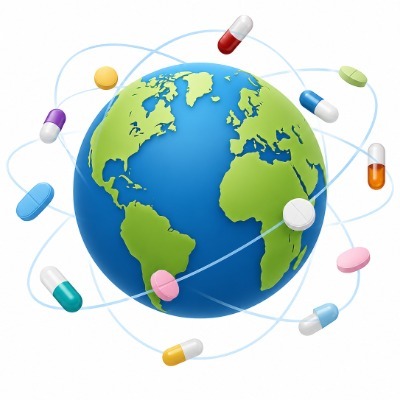 The U.S. Geological Survey (USGS) has conducted numerous studies identifying pharmaceuticals in streams, rivers, groundwater, and wastewater throughout the United States. These studies help scientists understand which compounds are most frequently detected and where additional monitoring may be needed.
Most documented detections occur in environmental waters, such as rivers, streams, groundwater, and wastewater. Pharmaceutical compounds have also been detected in some finished drinking water supplies, but generally at much lower concentrations following municipal treatment.
Importantly, detection does not necessarily indicate a health risk. Modern laboratory equipment can identify incredibly small concentrations that were impossible to measure just a few decades ago. Researchers emphasize that detecting a chemical and determining whether it presents a health concern are two separate scientific questions.
Pharmaceuticals Commonly Found in Water
Thousands of prescriptions and over-the-counter medications are used every day, but only a relatively small number have been frequently detected in environmental monitoring studies. Researchers continue expanding these studies as laboratory testing methods improve.
Some of the pharmaceutical classes most often identified in surface water, wastewater, groundwater, and in some treated drinking water supplies include:
- Antibiotics
- Pain relievers and anti-inflammatory medications
- Antidepressants
- Anti-seizure medications
- Beta blockers used to treat high blood pressure
- Hormones, including synthetic estrogens
- Cholesterol medications
- Diabetes medications
The concentration of these compounds varies depending on factors such as population density, seasonal medication use, wastewater treatment processes, and watershed characteristics. In most finished drinking water supplies, concentrations are extremely low and are typically measured in parts per trillion (ppt) or parts per billion (ppb).
One important point is that researchers rarely find just a single pharmaceutical. Instead, scientists often detect multiple compounds at the same time, creating what researchers refer to as chemical mixtures. Understanding how these mixtures behave in the environment remains one of the most active areas of ongoing research.
How Pharmaceuticals Affect Rivers, Lakes, and Wildlife
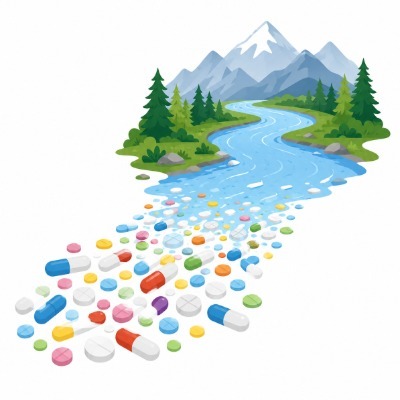 While human health research continues, scientists have stronger evidence showing that pharmaceuticals can negatively affect aquatic ecosystems.
Fish, amphibians, aquatic insects, algae, and microorganisms spend their entire lives in the water where these compounds occur. Unlike people who consume water from many sources, aquatic organisms may experience continuous exposure throughout their lifetime.
Researchers have documented several ecological effects associated with pharmaceutical exposure under laboratory or field conditions.
Changes in Fish Behavior
Certain antidepressants have been shown to altar feeding, predator avoidance, and reproductive behaviors in some fish species.
Behavioral changes may affect an animal's ability to survive, reproduce, or compete within its ecosystem.
Reproductive Effects
Hormone-based pharmaceuticals have received particular attention because they can interfere with endocrine systems.
Some studies have observed reproductive changes in fish exposed to synthetic hormones over extended periods. Scientists continue investigating how these effects influence entire fish populations over time.
Effects on Aquatic Plants and Microorganisms
Antibiotics entering waterways may influence microbial communities that play essential roles in nutrient cycling and ecosystem health.
Researchers are also studying how pharmaceutical compounds affect algae and other microscopic organisms that form the foundation of aquatic food webs.
Antibiotic Resistance
One environmental concern receiving growing attention is antimicrobial resistance.
The World Health Organization (WHO) identifies antimicrobial resistance as one of the world's major public health challenges. Although antibiotic resistance is driven by many factors, including inappropriate antibiotic use in human and veterinary medicine, scientists continue studying how antibiotic residues in wastewater may contribute to resistant bacteria in the environment.
This remains an active area of global research.
What Does Current Research Say About Human Health?
This is often the first question consumers ask, and the answer requires careful distinction between what scientists know and what they continue to study.

What Researchers Know
Scientists have confirmed that trace levels of some pharmaceuticals can be detected in certain drinking water supplies.
Researchers also know that these compounds are biologically active chemicals specifically designed to affect living organisms.
However, current scientific evidence has not established that the trace concentrations typically found in drinking water cause adverse health effects in humans.
According to organizations including the World Health Organization and the Water Research Foundation, concentrations measured in drinking water are generally far below therapeutic doses used in medical treatment.
Why Scientists Continue Studying
Although concentrations are extremely low, researchers continue investigating several important questions.
Lifetime Exposure
Unlike prescription medications, which are taken for a defined period and prescribed for a specific medical need, drinking water is consumed every day throughout life.
Scientists continue evaluating whether decades of exposure to extremely low concentrations could have cumulative effects.
Exposure to Multiple Compounds
 Another important research area involves mixtures.
Individuals may be exposed to multiple pharmaceutical residues simultaneously rather than a single medication.
Researchers are studying whether combined exposure produces different biological responses than exposure to one pharmaceutical alone.
Sensitive Populations
Scientists also continue evaluating whether certain groups may be more susceptible to environmental contaminants, including:
-
- Infants
- Young children
- Pregnant women
- Older adults
- Individuals with compromised immune systems
At present, additional research is needed before definitive conclusions can be drawn regarding long-term exposure at environmental concentrations.
Why Removing Pharmaceuticals Is So Challenging
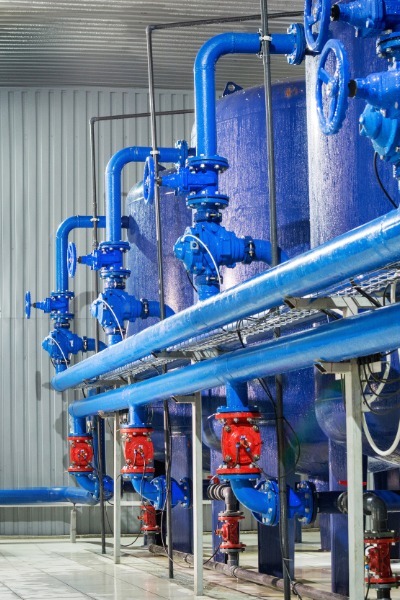 One common misconception is that municipal drinking water treatment plants should simply "filter out" pharmaceuticals.
In reality, the challenge is much more complex.
Thousands of pharmaceutical compounds exist, and each behaves differently in water.
Some dissolve readily.
Others attach to sediment.
Some break down quickly.
Others remain stable for extended periods.
A treatment process that effectively removes one compound may be less effective for another.
This diversity makes pharmaceutical removal far more complicated than treating conventional contaminants such as sediment or bacteria.
Wastewater Treatment Was Designed for Different Problems
Most wastewater treatment facilities were originally designed decades ago to remove:
- Disease-causing microorganisms
- Organic waste
- Nutrients
- Suspended solids
Today's treatment plants process approximately 34 billion gallons of water a day, and they perform exceptionally well at these tasks.
However, many pharmaceutical compounds were not recognized as contaminants of emerging concern when these facilities were built.
Utilities continue evaluating advanced treatment technologies capable of reducing additional contaminants while balancing cost, energy use, and operational complexity.
Advanced Treatment Technologies
Researchers continue studying several advanced treatment methods that may improve removal of pharmaceutical compounds.
These include:
- Activated carbon
- Ozonation
- Advanced oxidation processes
- Membrane filtration
- Reverse osmosis
Each technology has strengths and limitations, and no single treatment method removes every pharmaceutical compound under every condition.
Many water utilities are evaluating combinations of technologies to improve overall treatment performance.
What Can Consumers Do?
Although scientists continue studying pharmaceuticals in drinking water, there are practical steps consumers can take to help reduce contamination and make informed decisions about their own water quality.
Dispose of Medications Properly
Never flush medications unless the label or your pharmacist specifically instructs you to do so.
Instead, use community drug take-back programs whenever available.
Many pharmacies, hospitals, and law enforcement agencies participate in medication collection events that help keep unused drugs out of wastewater systems.
Proper disposal protects both water resources and public safety.
Read Your Consumer Confidence Report
Every community water system in the United States must provide an annual Consumer Confidence Report (CCR).
These reports summarize regulated contaminants detected in your local drinking water and explain whether the water meets federal drinking water standards.
While pharmaceuticals are generally not included in Consumer Confidence Reports because there are currently no federal drinking water standards for most pharmaceutical compounds, CCRs remain an excellent source of information about your local water quality.
Reading your report each year helps you better understand your drinking water source and treatment process.
Stay Informed
Research on contaminants of emerging concern continues to evolve.
Organizations such as universities, nonprofit water research organizations, and public health agencies regularly publish new findings that improve scientific understanding.
Consumers who stay informed are better equipped to make decisions about water quality, filtration, and environmental stewardship.
Choosing a Home Water Filtration System
Municipal drinking water in the United States is among the safest in the world, but no treatment system removes every possible contaminant. As scientists continue studying contaminants of emerging concern, including pharmaceuticals, many homeowners choose to add an extra layer of protection with a home water filtration system.
Not all filtration technologies perform the same. Their effectiveness depends on the type of contaminant, the treatment technology used, and whether the system has been independently tested.
Look for Independent Certification
When evaluating a water filtration system, one of the most important considerations is independent certification rather than marketing claims.
Organizations such as NSF and the Water Quality Association (WQA) evaluate water treatment products to verify that they perform as claimed under standardized testing conditions.
Rather than relying on generalized claims such as "filters everything," look for systems certified to reduce specific contaminants that matter most to your household.
For example, certifications may address contaminants such as:
- Lead
- Cysts
- Chlorine taste and odor
- Volatile organic compounds (VOCs)
- Certain PFAS ("forever chemicals")
- Microplastics
- Asbestos
- Other contaminants identified in NSF/ANSI standards
Certification provides consumers with greater confidence that a product has been independently evaluated using established testing protocols.
Where Does Multipure Fit?
Choosing a home water filtration system is ultimately about making informed decisions based on your household's needs and your local water quality.
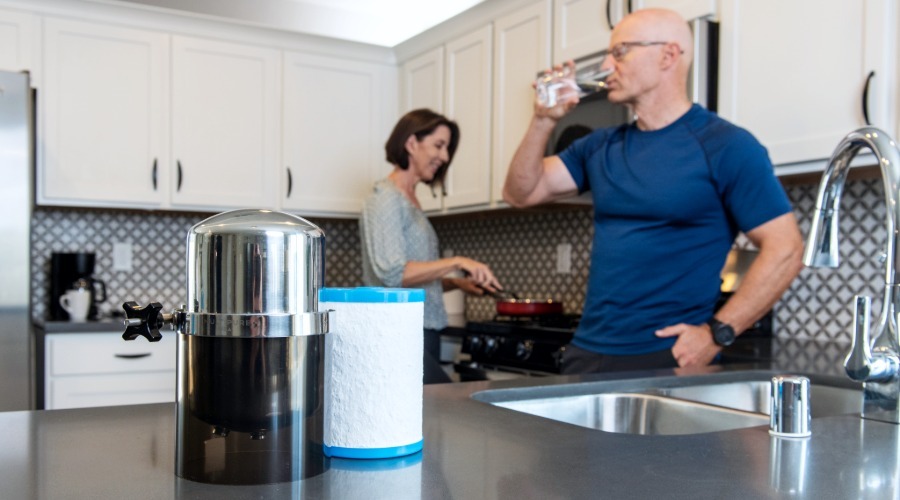
Multipure drinking water systems use solid carbon block filtration and are independently certified under multiple NSF/ANSI standards to reduce a wide range of contaminants commonly found in drinking water, including chlorine, lead, cysts, asbestos, many volatile organic compounds (VOCs), PFAS, microplastics, and even bacteria and viruses, depending on the specific model and certification.
While no home filtration system is certified to remove every pharmaceutical compound, carbon block technology has been widely studied for its ability to reduce many organic compounds. Consumers interested in reducing contaminants beyond those addressed by municipal treatment may wish to compare independently certified filtration systems and review each manufacturer's certification data before making a purchase.
Equally important, a home filtration system should complement, not replace, good environmental stewardship. Proper medication disposal, staying informed about local water quality, and supporting clean water initiatives all contribute to protecting water resources for future generations.

Frequently Asked Questions
- Can pharmaceuticals really be found in drinking water?
Yes. Researchers have detected trace amounts of certain pharmaceuticals in some public drinking water systems, although detections are much more common in rivers, lakes, groundwater, and wastewater. Concentrations are generally very low and are typically measured in parts per trillion or parts per billion. - Are pharmaceuticals regulated in U.S. drinking water?
Currently, the U.S. Environmental Protection Agency (EPA) does not have national drinking water standards for most pharmaceutical compounds. Research continues to help determine which contaminants may require future monitoring or regulation. - Why don't wastewater treatment plants remove all pharmaceuticals?
Most wastewater treatment facilities were originally designed to remove bacteria and viruses. Many pharmaceutical compounds require advanced treatment technologies that are not part of traditional treatment designs. - Which medications are found most often?
Studies have identified antibiotics, pain relievers, antidepressants, anti-seizure medications, beta blockers, hormones, and other prescriptions and over-the-counter medications in wastewater and surface waters. - Should I be worried about pharmaceuticals in my tap water?
Current scientific evidence has not established that the trace concentrations typically found in drinking water cause adverse health effects in humans. However, researchers continue studying long-term exposure and the effects of mixtures of multiple pharmaceutical compounds. - How can I help reduce pharmaceutical contamination?
Properly dispose of unused medications through community drug take-back programs and avoid flushing unused medications down the toilet. - Does boiling water remove pharmaceuticals?
Boiling water is intended to kill microorganisms such as bacteria and viruses. It is not considered an effective method for removing pharmaceutical compounds and may concentrate some dissolved contaminants as water evaporates. - Does my Consumer Confidence Report list pharmaceuticals?
Generally, no. Consumer Confidence Reports summarize regulated drinking water contaminants. Because pharmaceuticals currently are not federally regulated drinking water contaminants, they are typically not included in annual reports. - Can home water filters remove pharmaceuticals?
No home water filter is certified to remove every pharmaceutical compound. However, technologies such as activated carbon and reverse osmosis have been shown to reduce many pharmaceutical compounds, with effectiveness varying by the specific medication and treatment system.
Sources and References
The following organizations provide reliable, evidence-based information on pharmaceuticals in drinking water and contaminants of emerging concern.
U.S. Environmental Protection Agency (EPA)
U.S. Drug Enforcement Administration (DEA)
World Health Organization (WHO)
Harvard Medical School - Harvard Health Publishing
Harvard T.H. Chan School of Public Health
Additional Industry Resource:
Arvia
Conclusion
Modern science has greatly improved our ability to detect contaminants at extraordinarily low concentrations, leading to increased awareness of pharmaceuticals in rivers, lakes, groundwater, and drinking water supplies. While researchers have confirmed that trace amounts of some medications can be present in the environment, current evidence has not established that the levels typically detected in drinking water cause adverse health effects in humans.
At the same time, scientists continue to investigate important questions about lifelong exposure, mixtures of multiple compounds, and ecological impacts on aquatic life. As research advances, improvements in water treatment technologies, environmental monitoring, and responsible medication disposal will continue to play an important role in protecting water quality.
Consumers can also take practical steps by staying informed about their local water quality, properly disposing of unused medications, and choosing NSF certified home water filtration systems that have been tested to reduce contaminants of concern. Together, these actions help support healthier communities and cleaner water resources for future generations.